
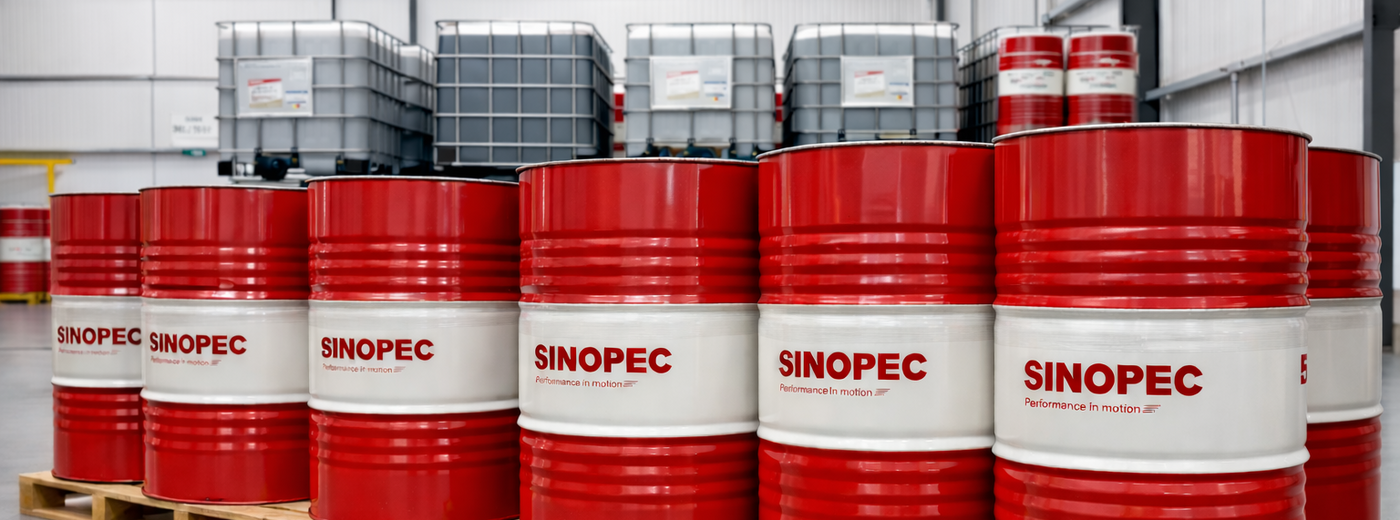
This catalogue presents the Sinopec lubricant series supplied by Sinopec Online, structured to support specification-led selection. Products are grouped by lubricant function and family, with grade systems and typical applications indicated to allow rapid confirmation against OEM requirements and operating conditions.
This catalogue reflects the Sinopec lubricant families routinely supplied by Sinopec Online for industrial, automotive, plant, and fleet applications. Specialist and sector-specific products, including marine, rail, and other application-specific grades, are supplied subject to specification and availability.
Sinopec Online Technical Team
For product selection support, contact Sinopec Online or call +44 020 8068 3444.
How to use this catalogue: choose a category, select a series, then confirm the viscosity or grade system for your equipment.
Engine oils
Engine oils for passenger car, heavy-duty diesel, marine, and stationary engine service, selected primarily by OEM approval, viscosity grade, and duty cycle. Formulation focus is on wear control, deposit management, oxidation stability, and compatibility with emissions control systems where applicable.
| Series | Primary use | Typical grade system |
|---|---|---|
TULUX |
Application mapping based on equipment type and operating environment, aligning viscosity grade, additive system, and performance category with load, temperature, contamination risk, and OEM requirements to maintain reliability. | SAE viscosity grades with ACEA and API performance categories, commonly aligned to E7 and E9 duty cycles. |
JUSTAR |
Passenger car engine oils for petrol and light-duty diesel engines where OEM approval, viscosity grade, and emissions system compatibility govern selection. Formulations prioritise deposit control, wear protection, oxidation stability, and fuel economy performance where specified. | SAE viscosity grades with ACEA and API performance categories, plus OEM approvals where applicable. |
| TULUX Marine | Marine diesel engine oils for propulsion and auxiliary engines where operating profile, fuel sulphur level, and engine design determine lubricant selection. Performance requirements are defined by duty severity, base number retention, and thermal stability. | Application-specific performance levels and viscosity grades defined by engine type and duty. |
| Gas engine oils | Oils for stationary gas engines operating under continuous or high load duty, where nitration resistance, oxidation control, ash level, and deposit management influence valve life and maintenance interval. | OEM approval led categories, matched by engine type, duty cycle, and fuel quality. |
Hydraulic oils
Hydraulic oils for industrial and mobile systems operating under defined pressure, temperature, and cleanliness regimes. Selection is governed by pump design, viscosity at operating temperature, filtration sensitivity, and environmental constraints, with oxidation stability and shear performance influencing service life.
| Series | Primary use | Typical grade system |
|---|---|---|
L-HM |
Anti-wear hydraulic oils for industrial and mobile hydraulic systems where pump design, operating pressure, and filtration sensitivity require controlled wear performance, oxidation stability, and sustained cleanliness. | ISO VG viscosity grades, commonly ISO 32, ISO 46, ISO 68, and ISO 100. |
| AE Series HC | Premium anti-wear hydraulic oils formulated with highly refined mineral base oils and advanced additive systems, designed for industrial and mobile hydraulic systems operating under moderate to high-pressure conditions where enhanced wear protection, oxidation stability, cleanliness, and extended service life are required. | ISO VG viscosity grades, commonly ISO 15, ISO 32, ISO 46, ISO 68, and ISO 100, aligned with ISO 11158 (L-HM) and DIN 51524 Part 2 (HLP) requirements. |
L-HV |
High viscosity index hydraulic oils for systems exposed to wide ambient or operating temperature variation, where viscosity stability is required to maintain response, efficiency, and component protection across start-up and full load operation. | ISO VG viscosity grades with higher viscosity index targets. |
| Zinc free and ashless hydraulic families | Hydraulic oils for systems where zinc-containing additives are restricted or where fine filtration, water separation, and deposit control are critical to valve and servo performance. | ISO VG viscosity grades aligned to the specified OEM requirement. |
| Fire resistant hydraulic families | Hydraulic fluids specified for applications where fire risk mitigation is required by site or equipment design, with fluid type selected according to system compatibility and operating conditions. | Viscosity grades matched to the specified fire-resistant fluid class. |
| Biodegradable hydraulic families | Hydraulic fluids for environmentally sensitive applications where biodegradability is specified, subject to OEM approval and operating temperature constraints. | Viscosity grades matched to the approved biodegradable base fluid type. |
Gear Oils
Gear and driveline oils for enclosed industrial gear drives, automotive axles, and manual transmissions operating under sustained load and shock conditions. Selection depends on gear type, load severity, pitch line speed, and operating temperature, with film strength, micropitting resistance, and thermal stability as primary performance criteria.
| Series | Primary use | Typical grade system |
|---|---|---|
L-CKD |
Heavy-duty industrial gear oils for enclosed gear drives operating under high load and shock conditions, where film strength, micropitting resistance, oxidation stability, and water separation influence gear life. | ISO VG viscosity grades with EP capability where required by gear design and duty. |
L-CKE and L-CKE/P |
Industrial gear oils for applications including worm gear drives, where friction behaviour, thermal performance, and efficiency are significant selection factors alongside load capacity. | ISO VG viscosity grades, commonly higher grades for worm gear duty. |
GL series |
Automotive axle and manual transmission oils for hypoid and heavily loaded gear sets, where extreme pressure performance, scuffing resistance, and thermal stability are required under sustained torque. | SAE J306 viscosity grades with API GL performance level, commonly GL-5 for hypoid axles. |
| Synthetic and semi-synthetic gear families | Gear oils for extended service or elevated temperature operation where synthetic base fluids improve oxidation stability, viscosity retention, and low-temperature performance. | ISO VG or SAE grades depending on industrial or automotive application. |
Transmission fluids
Transmission and powershift fluids for off-highway, agricultural, and heavy plant drivetrains where friction characteristics directly control clutch engagement and component durability. OEM specification compliance, shear stability, and controlled friction performance define suitability across combined transmission and final drive systems.
| Series | Primary use | Typical grade system |
|---|---|---|
TO-4 |
Powershift transmission and drivetrain fluids for off-highway and heavy plant equipment, where controlled friction characteristics, shear stability, and wear protection govern clutch engagement behaviour and component durability. | SAE 10W, SAE 30, and SAE 50 with performance defined by OEM specifications and friction requirements. |
| UTTO and STOU families | Combined transmission, final drive, and hydraulic fluids for agricultural equipment where OEM specifications define friction behaviour, viscosity profile, and system compatibility across multiple lubrication functions. | OEM specification led fluid type with viscosity profile suited to combined transmission and hydraulic use. |
ATF families |
Automatic transmission fluids where transmission design and friction material require a defined ATF specification, with performance governed by friction stability, oxidation resistance, and viscosity control. | OEM specification led fluid category with viscosity and friction behaviour matched to the unit. |
Greases
Greases for rolling and sliding bearing applications across general industrial, automotive, and specialist duties. Selection is based on operating temperature, speed, load, environmental exposure, and relubrication interval, with thickener type, base oil viscosity, and EP performance determining suitability.
| Family | Primary use | Typical grade system |
|---|---|---|
Lithium |
General-purpose greases for bearings and chassis lubrication where balanced water resistance, pumpability, and mechanical stability are required under moderate load and temperature conditions. | NLGI consistency grades, commonly NLGI 2. |
Lithium complex |
Greases for higher temperature and higher load bearing applications, where mechanical stability, resistance to softening, and water resistance influence relubrication interval and bearing reliability. | NLGI consistency grades with higher dropping point targets. |
| Molybdenum disulphide | Greases for boundary lubrication and heavily loaded sliding contacts, where solid lubricant content supports wear protection under shock load and oscillating motion. | NLGI consistency grades with EP performance emphasis. |
Polyurea |
Greases for electric motor and long-life bearing applications, where oxidation stability, low oil bleed, and consistency retention support extended service intervals. | NLGI consistency grades. |
| Synthetic base grease families | Greases for temperature extremes or extended relubrication intervals, where synthetic base oils improve oxidation stability and low-temperature performance. | NLGI consistency grades selected by speed, load, and temperature. |
| Calcium sulfonate and other specialist thickeners | Greases for severe duty environments where water resistance, corrosion protection, and extreme load performance are primary selection criteria. | NLGI consistency grades with performance matched to the duty. |
Industrial lubricants
Industrial oils for circulating systems, turbines, slideways, heat transfer, and continuous-duty lubrication points. Performance requirements centre on oxidation stability, water separation, controlled friction behaviour, and material compatibility to support reliability and oil life.
| Series | Primary use | Typical grade system |
|---|---|---|
L-TSA |
Oils for steam and gas turbine lubrication and control systems, where oxidation stability, water separation, air release, and deposit control govern reliability and oil life. | ISO VG viscosity grades, commonly ISO 32, ISO 46, and ISO 68. |
L-HG |
Slideway oils for machine tools and combined hydraulic-slideway systems, where controlled friction behaviour reduces stick-slip and supports positioning accuracy. | ISO VG viscosity grades selected by slideway design and feed speed. |
L-QB |
Heat transfer oils for closed and open circulation systems, where thermal stability, bulk oil temperature, and system design define suitability. | Product grade defined by thermal stability and temperature capability. |
| Compressor oils | Oils for rotary screw, vane, and reciprocating compressors, where air end design, discharge temperature, and duty cycle govern viscosity grade and formulation choice. | ISO VG viscosity grades and compressor type specific requirements. |
| Refrigeration and low temperature oils | Oils for refrigeration compressors where miscibility, wax control, and viscosity at operating temperature influence system efficiency and reliability. | Viscosity and base oil type matched to refrigerant and compressor design. |
| Circulating oils and bearing oils | Oils for circulation lubrication systems where oxidation stability, water separation, and filtration cleanliness support bearing and system life. | ISO VG viscosity grades selected by bearing design and operating temperature. |
| Process oils and white oils | Oils for process applications where purity, volatility, and material compatibility are defined by process and regulatory requirements. | Viscosity grades and purity classes defined by application requirements. |
Metalworking fluids
Metalworking fluids for machining, forming, and corrosion protection processes where lubrication, cooling, and surface finish requirements vary with material, operation severity, and machine design. Selection is process-specific and influenced by fluid stability, maintenance practice, and downstream compatibility.
| Family | Primary use | Typical grade system |
|---|---|---|
| Neat cutting oils | Undiluted cutting oils for machining operations where lubricity, tool life, and surface finish are prioritised and cooling demand is secondary. | Viscosity and additive system selected by operation type and material. |
| Water miscible fluids | Soluble, semi-synthetic, and synthetic metalworking fluids for machining operations where heat removal, fluid stability, and surface finish must be balanced against maintenance practice and material type. | Concentration range and performance class defined by fluid type and duty. |
| Forming and drawing oils | Oils for metal forming operations where film strength and boundary lubrication protect tooling under high contact pressure. | Viscosity and EP system selected by forming severity and material. |
| Rust preventives | Fluids for corrosion protection during storage or inter-process transfer, selected by protection duration, environment, and removal requirements. | Film type and protect period defined by application and environment. |
Marine lubricants
Marine lubricants for auxiliary and propulsion engines operating on distillate and residual fuels, where engine design, fuel sulphur level, and operating profile govern product selection.
| Series | Primary use | Typical grade system |
|---|---|---|
| Trunk piston engine oils | Four-stroke marine diesel engines operating on distillate fuels, where detergency, oxidation stability, and base number retention influence piston cleanliness and drain interval. | SAE viscosity grades with BN range selected by fuel sulphur content and engine duty. |
| Marine system oils | Crankcase and crosshead lubrication systems where oil separation from cylinder lubrication is required and contamination control influences oil life. | SAE viscosity grades, commonly SAE 30 and SAE 40. |
| Marine cylinder oils | Two-stroke crosshead engines operating on residual fuels, where acid neutralisation, detergency, and liner wear control define suitability. | SAE 50 with base number selected by fuel sulphur level. |
Aviation lubricants
Aviation lubricants supplied strictly against approved specifications for piston engines, turbine engines, and associated hydraulic systems, where substitution outside approval is not permitted.
| Series | Primary use | Typical grade system |
|---|---|---|
| Piston engine oils | Aircraft piston engines where ash content, viscosity stability, and deposit control are defined by engine design and operating regime. | SAE aviation viscosity grades as defined by OEM and aviation authority approval. |
| Turbine engine oils | Gas turbine engines where thermal stability, oxidation resistance, and deposit control govern bearing and gearbox protection. | Low-viscosity synthetic grades defined by approved aviation specifications. |
| Aviation hydraulic fluids | Aircraft hydraulic systems where low-temperature flow, material compatibility, and fire resistance are specified. | Specification-defined hydraulic fluid categories. |
Rail lubricants
Rail lubricants for traction, driveline, and auxiliary systems operating under continuous duty conditions with extended maintenance intervals.
| Series | Primary use | Typical grade system |
|---|---|---|
| Axle box oils and greases | Rolling stock axle bearings where load, speed, and operating temperature define lubricant selection. | ISO VG oils or NLGI grease grades selected by bearing design. |
| Traction gear oils | Rail traction gearboxes operating under high load and shock conditions, where film strength and oxidation stability influence gear life. | ISO VG or SAE grades defined by gearbox design. |
| Compressor and auxiliary oils | Onboard compressors and auxiliary equipment where duty cycle and discharge temperature govern viscosity and formulation. | ISO VG viscosity grades selected by equipment specification. |
Grade systems
Viscosity and consistency grade systems defining film thickness, energy losses, and wear control across lubricant types. Final grade selection is confirmed against performance category, OEM specification, and operating conditions.
| Grade system | Applied to | Selection governed by |
|---|---|---|
| ISO VG | Industrial oils including hydraulic, circulating, turbine, slideway, compressor, and many industrial gear oils. | Operating temperature, required film thickness, system design, and energy efficiency considerations. |
| SAE (engine oils) | Passenger car, heavy-duty diesel, marine, and stationary engine oils. | OEM viscosity requirement, operating temperature range, emissions system compatibility, and duty cycle. |
| SAE J306 (gear oils) | Automotive axle and manual transmission oils. | Gear type, load severity, operating temperature, and OEM specification. |
| NLGI consistency | Greases for rolling and sliding bearing applications. | Bearing speed, operating temperature, relubrication interval, and grease delivery method. |
| OEM or application-specific grades | Transmission fluids, powershift fluids, aviation lubricants, and specialist applications. | OEM specification, friction behaviour, material compatibility, and regulatory approval. |
Where multiple grade systems apply, viscosity grade is selected first, followed by confirmation of performance category, additive system, and any required OEM approvals.
Applications
Application mapping based on equipment type and operating environment, aligning viscosity grade, additive system, and performance category with load, temperature, contamination risk, and OEM requirements to maintain reliability.
| Application | What matters most | Browse |
|---|---|---|
| Industrial hydraulics and mobile hydraulics | Correct ISO VG for operating temperature, anti-wear performance, cleanliness for valves and servo components, water separation, and oxidation control. | Hydraulic oils |
| Enclosed gear drives and gearboxes | Correct ISO VG for pitch line speed and temperature, EP performance where load demands it, micropitting control where relevant, and water separation. | Industrial gear oils |
| Fleet diesel engines | API and ACEA category matching, soot handling, oxidation stability, piston cleanliness, and compatibility with emissions systems. | Diesel engine oils |
| Passenger car engines | OEM approval matching, viscosity grade selection, deposit control, wear protection, and fuel economy performance where required. | Passenger car engine oils |
| Powershift transmissions and final drives | Friction control for clutch performance, shear stability, wear protection, and correct TO-4 type performance for the equipment. | TO-4 transmission fluids |
| Bearings and general greasing | NLGI grade selection for speed and temperature, thickener selection for water resistance and stability, and EP performance where shock loads exist. | Greases |
Documentation
Product pages provide technical data, specification statements, and documentation where available. Where an application requires a specific approval or performance category, verify selection against the product page for the exact grade and pack size.
Technical support
Selection support is available for viscosity grade, specification matching, and application suitability for fleet and industrial use. When contacting us, include the equipment type, the OEM-specified viscosity grade, operating temperatures, and any required specifications or approvals.
For product selection support, contact Sinopec Online or call +44 020 8068 3444.